

Keyword research for Canadian businesses is the base of any SEO plan that works. Yet it’s the step many companies get wrong. Canadian businesses often chase terms that are too competitive, target phrases with many searches but no buyer intent, or guess what customers type instead of checking the data. As a result, months of work can go in the wrong direction. This guide shows you how to do keyword research properly for the Canadian market.
Volume Versus Usefulness: They’re Not the Same Thing
A keyword with 10,000 monthly searches isn’t automatically better than one with 200. Volume and usefulness measure different things. What gives a keyword its strength depends on the searcher’s intent (are they researching or ready to buy?), its commercial potential, how hard it is to rank on page one, and whether local people in your service area actually use it.
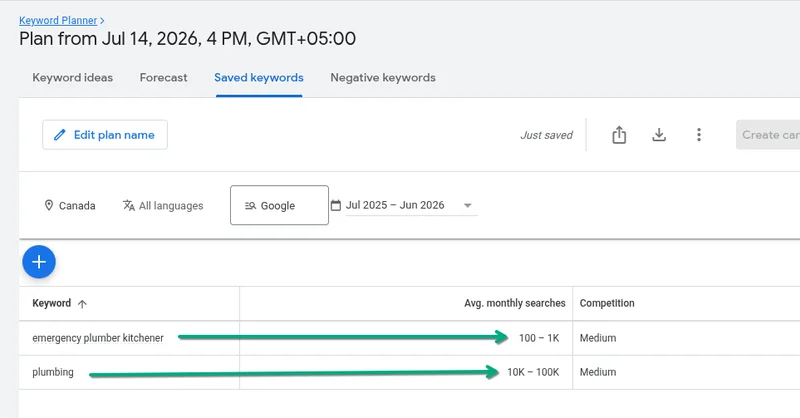
For most Canadian service businesses, “emergency plumber Kitchener” with only 100 searches a month is far more useful than “plumbing” with 50,000. The smaller term represents someone who needs a plumber right now in your city. The bigger one is dominated by national brands and generic articles you’ll never outrank.
Free Tools for Keyword Research for Canadian Businesses
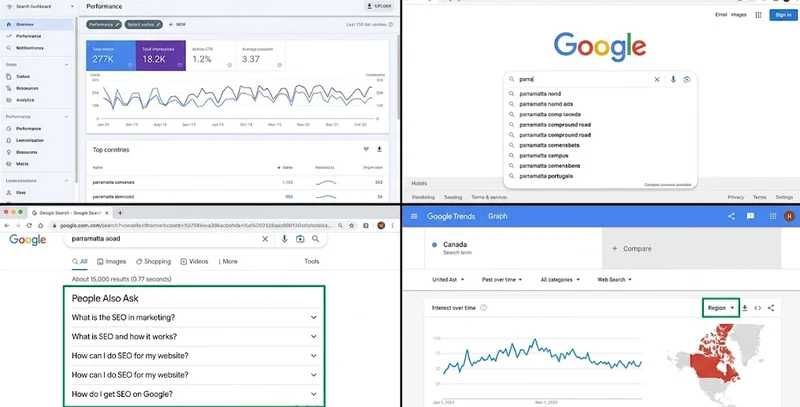
You don’t need expensive paid tools to start. Google gives you several free options that work well for Canadian research. If your site is live, Google Search Console shows which keywords bring impressions and clicks this is the most accurate starting point because it uses your own visitor data. Google’s autocomplete suggests common searches as you type, and the “People Also Ask” boxes show questions from searchers useful for blog or FAQ topics. Google Trends lets you compare keywords over time within Canada, which helps spot seasonal patterns or find which variations are more popular.
Paid Tools for Growing SEO Campaigns
For a more established campaign, paid tools provide data that free options can’t match. Ahrefs offers detailed keyword stats with Canadian volume estimates, difficulty scores, and competitor keyword analysis – its content gap tool is useful for finding terms competitors rank for that you don’t. SEMrush offers similar features, with strong keyword and position tracking for local Canadian research. Moz’s Keyword Explorer helps with difficulty scoring and finding where to put your effort.
For a smaller business just starting SEO, Google Search Console plus the free versions of these tools is enough to begin with. As you grow, investing in a paid tool can pay for itself through the data and guidance it provides.
Building a Keyword Map for Your Site
A keyword map assigns one primary keyword and a few secondary ones to every page on your site. It guides your on-page work. Start by listing every page, then pick the main keyword each page matches best, plus three to five related terms. Then make sure no two pages target the same primary keyword that causes cannibalization, where your own pages compete against each other. Finally, find the gaps: topics customers search for that your site doesn’t yet cover this shows where to create new content.
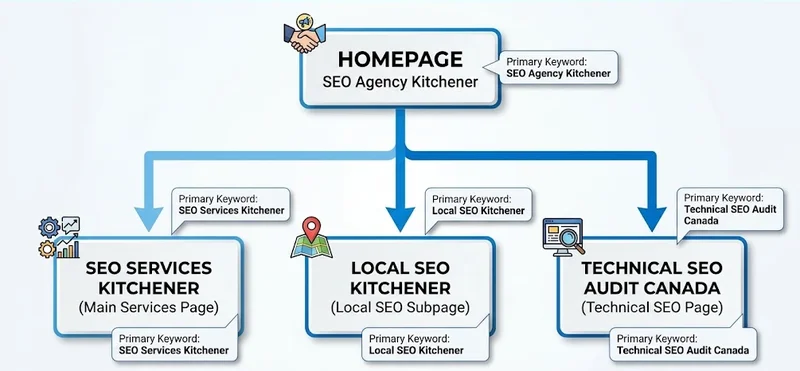
For an SEO agency in Kitchener, for instance, the main services page might target “SEO services Kitchener,” a local SEO subpage might target “local SEO Kitchener,” and a technical SEO page might target “technical SEO audit Canada.” Each page targets its own keyword group without overlapping.
Long-Tail Keywords for Better Search Targets
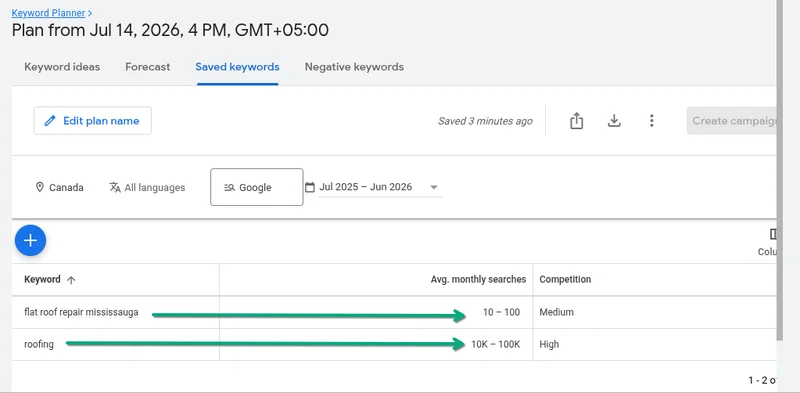
Long-tail keywords are longer, more specific search phrases. They have lower individual search volume, but they’re less competitive and often convert at higher rates. For Canadian businesses, these opportunities are everywhere. Rather than chasing “roofing” which is nearly impossible go for “flat roof repair Mississauga,” “how much does roof replacement cost in Ontario,” or “emergency roof leak repair Toronto.” Each of these has clear intent and location included. A page for each one serves a specific commercial need, and a group of these long-tail pages can bring targeted traffic.
Learning From What Competitors Already Rank For
Your competitors’ SEO strategy can provide useful keyword data. If a competitor ranks on page one for a keyword, you know that term has commercial potential, and you know it can be achieved because another site has already done it.
Run a competitor’s domain through Ahrefs or SEMrush to see which keywords they rank for in Canada, which ones you don’t rank for yet, which ones bring the most traffic to their site (the top traffic keyword isn’t always the obvious one), and which ones they rank for with weak content – this gives you a chance to create something better. Focus on competitors similar to your own site in size and authority; copying the strategy of a site with ten times your authority rarely works.
Building Around the Canadian Seasons
Canada’s four seasons create predictable search patterns that many businesses overlook. HVAC companies see a rise in “furnace repair” searches in October and November, and “air conditioner installation” searches in May and June. Landscaping businesses see lawn care searches peak in April and snow removal searches in November. Retailers see spikes around Boxing Day, Back to School in August, and Christmas.
Use Google Trends to track search volume for your main keywords throughout the year, and create content targeting a seasonal keyword six to eight weeks before its peak. This gives the page time to rank before demand increases.
Bilingual Keyword Research for Businesses Serving Quebec
If your business operates in or targets Quebec, bilingual keyword research matters. French Canadian search behaviour differs from a simple translation. Quebec searchers use their own expressions that don’t always match standard French, so a direct translation of an English keyword can miss how Quebec consumers search.
Research French keywords separately – use Google Trends with Canada and French language filters, talk to native French Canadian speakers to check phrasing, and create a dedicated French section of your site if Quebec traffic is a focus. This avoids the common mistake of translating English content directly.
Final Thoughts
The Canadian search market keeps shifting as consumer habits change, new competitors appear, and Google refines how it reads intent. Keyword research isn’t a one-time spreadsheet. It’s an ongoing, quarterly practice of monitoring, adjusting, and finding new opportunities as they appear.
Once you have a solid keyword map, our on‑page SEO best practices guide shows you exactly how to build each page around its target keyword properly, and our link building guide picks up from there on earning the authority to actually rank for it.
FAQs
What’s the difference between keyword volume and keyword value?
Volume is how many times a word is searched each month. Value is about whether that search leads to a sale, a phone call, or a booked service. A keyword with 100 searches from people ready to buy right now is worth more than 50,000 searches from people just browsing.
What free tools can I use for keyword research in Canada?
You can start with Google Search Console (shows what people actually search to find your site), Google autocomplete (shows popular searches as you type), “People Also Ask” boxes (shows real questions people have), and Google Trends (helps compare keywords over time within Canada).
Should I pay for SEO keyword tools?
For a new or small business, free tools are enough to start. As you grow and want deeper data, tools like Ahrefs, SEMrush, or Moz give you competitor insights, difficulty scores, and better volume estimates. For many businesses, a paid tool pays for itself through better targeting.
What is a keyword map and why do I need one?
A keyword map assigns one main keyword and a few related ones to every page on your site. It stops two pages from targeting the same term (which confuses Google), shows where you have content gaps, and guides all your writing.
What are long-tail keywords and why should I care?
Long-tail keywords are longer, more specific phrases like “flat roof repair Mississauga” instead of just “roofing.” They have fewer searches, but they’re less competitive and people searching them are usually ready to act, so they convert better.
How can I use competitor data for keyword research?
Run a competitor’s domain through Ahrefs or SEMrush to see which keywords they rank for, which ones bring them the most traffic, and where they have weak content. That shows you opportunities to create something better. Focus on competitors similar to your size.