Why On-Page SEO Remains the Backbone of Any Ranking Strategy
On-page SEO best practices 2026 start with a simple truth. Before you build backlinks or fix server configurations, every page on your website must be optimized for the content it contains. On-page SEO is the practice of optimizing individual pages to rank for specific keywords and deliver the best possible experience to the user who arrives there.
Google’s ranking algorithms have become increasingly sophisticated. They have moved well beyond simple keyword matching. In 2026, on-page SEO is about demonstrating genuine expertise, clearly answering user intent, and structuring information so both humans and search engines can consume it efficiently. This guide covers every element of on-page optimization that matters for Canadian websites.
Understanding Search Intent Before You Optimize
The single most important on-page SEO principle is matching your content to the intent behind the target keyword. Search intent falls into four categories.
- Informational intent means the user wants to learn something. An example would be “What is domain authority?”
- Navigational intent means the user wants to find a specific website. An example would be “Intrend SEO Kitchener.”
- Commercial intent means the user is comparing options before buying. An example would be “Best SEO agency Kitchener.”
- Transactional intent means the user is ready to take an action. An example would be “Hire SEO consultant Ontario.”
Every page you optimize must be built around the correct intent. A product page written like a blog post confuses both users and Google. A service page that reads like a how to guide will rank for the wrong keywords. Before you write a single word, confirm which intent your target keyword represents. Following on-page SEO best practices 2026 means getting this right from the start.
Title Tags: The Most Important On-Page SEO Element
Your title tag is the blue clickable headline that appears in Google search results. It is consistently rated as one of the strongest on-page ranking signals.
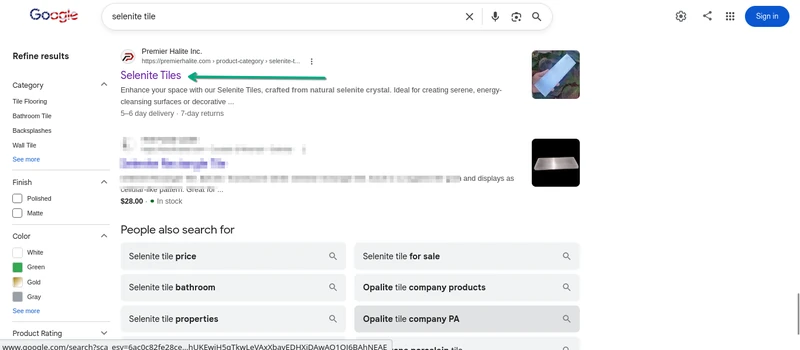
Here are the best practices for title tags in 2026.
Include your primary keyword, ideally near the beginning. This tells Google and users what your page is about right away.
Keep titles under 60 characters to avoid truncation in search results. If your title gets cut off, people might not click.
Make each title unique across your entire site. No duplicates allowed. Every page should have its own identity.
Write for the user first, then optimize for the keyword. Clickable titles get more traffic. If your title is boring, people will scroll past.
For local businesses, including your city adds strong local relevance signals. It tells Google exactly where you serve.
Here is an example. “Plumbing Services Kitchener | Fast, Reliable & Licensed Plumbers” targets the keyword, specifies location, and gives the reader a clear reason to click.
Meta Descriptions: Influencing Click-Through Rate
Meta descriptions do not directly affect rankings, but they significantly influence click-through rate. A higher CTR from search results can indirectly improve rankings. This is an important part of on-page SEO best practices 2026.
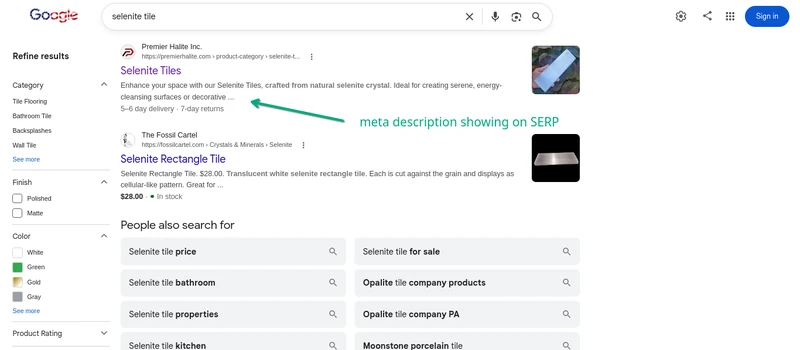
Write meta descriptions that are 140 to 160 characters long. Include your primary keyword naturally. Describe clearly what the user will find on the page. Include a call to action where appropriate, like “Call today” or “Get a free quote.”
Every page should have a unique meta description. When Google cannot find a meta description, it generates one automatically by pulling text from the page. The result is often unappealing and unoptimized. Do not let Google write your descriptions for you.
Heading Tags (H1 to H6): Structuring Content for Users and Search Engines
Headings create a hierarchy that helps both users and search engines navigate your content. Here is how to use them correctly.
Your H1 should appear once per page, only. It should clearly state what the page is about and include your primary keyword. It does not have to be identical to the title tag.
Your H2 tags should be used for major section headings throughout the page. These are excellent places to include secondary keywords naturally. For example, if your main keyword is “on-page SEO best practices 2026,” your H2 tags might include related terms like “title tag optimization” or “content quality and depth.”
H3 to H6 tags should be used for subsections within H2 sections. Do not skip levels, like jumping from H2 to H4, as this disrupts the document outline.
Write headings that genuinely describe the content that follows. Do not just string keywords together. “How Kitchener Businesses Can Improve Their Google Rankings” is better than “SEO Kitchener Ontario Rankings.” The first one is helpful. The second one feels spammy.
Content Quality and Depth: Writing for E-E-A-T
Google’s quality guidelines emphasize something called E-E-A-T. That stands for Experience, Expertise, Authoritativeness, and Trustworthiness. In 2026, content that clearly demonstrates firsthand experience and genuine expertise consistently outperforms thin, superficial content.
For each page you optimize, ask yourself these questions. Does this content genuinely answer the user’s question better than competing pages? Does it demonstrate real knowledge of the subject? Is it backed by credible information?
Long form content does not automatically outperform shorter content. The right length is whatever it takes to fully answer the user’s question without padding. For competitive keywords in Canada, comprehensive pages of 1,500 to 3,000 words typically perform well. But quality always trumps quantity. A 1,000 word page that truly helps someone is better than a 3,000 word page full of fluff.
Keyword Optimization: Beyond Keyword Density
Keyword stuffing is an outdated and counterproductive practice. This means forcing your target keyword into a page as many times as possible. Modern on-page SEO best practices 2026 focus on natural, contextual keyword usage.
Include your primary keyword in the title tag, the H1, the first 100 words of content, at least one H2, and naturally throughout the body text.
Use related terms and synonyms. Some people call these LSI keywords, which stands for Latent Semantic Indexing. If your page is about “roof repair Kitchener,” related terms like “shingle replacement,” “roofing contractor,” “emergency roof fix,” and “Waterloo Region roofing” all add semantic context without keyword stuffing. This helps Google understand your topic more deeply.
Internal Linking: Building Site Architecture and Distributing Authority
Internal links connect pages within your website. They serve two critical functions. They help users discover related content. And they distribute what is called link equity, or SEO authority, from higher authority pages to those that need it.
Here are some best practices for internal linking.
Use descriptive anchor text that tells the user and Google what the destination page is about. Avoid generic anchors like “click here” or “read more.” They do not help anyone.
Link from high traffic, high authority pages like your homepage or top blog posts to pages you want to rank better. This passes authority to those pages.
Ensure every important page on your site is reachable within three clicks from the homepage. If a page is buried too deep, Google might not find it.
Audit and fix broken internal links regularly. They waste crawl budget and create dead ends for users. A broken link is a lost opportunity.
Images and Media Optimization
Images improve user experience and can drive traffic through Google Image Search. But they need to be properly optimized to avoid harming page speed.
Alt text is important. Every image should have descriptive alt text that explains what the image shows. Include keywords naturally where relevant, but do not force them. Alt text is also critical for web accessibility. People using screen readers depend on it.
File names matter too. Use descriptive, keyword relevant file names. For example, “kitchener-seo-services-team.jpg” is better than “IMG_0042.jpg.” Google reads file names to understand what the image is about.
File size is another key factor. Compress every image before uploading. Use WebP format where possible. Large uncompressed images are one of the most common causes of slow page speed. A slow page hurts your rankings and your users.
Image dimensions also matter. Serve images at the correct display size. Uploading a 4000 pixel wide image to display at 400 pixels is a common performance mistake. It makes your page load much slower than it needs to.
Conclusion: On-Page SEO Is a Continuous Process, Not a One-Time Fix
Google’s algorithm evolves, search intent shifts, and your competitors are constantly improving their pages. On-page SEO is not a task you complete once. It is an ongoing practice of refinement based on performance data.
Following on-page SEO best practices 2026 means staying current with what works. It means regularly reviewing your pages and making improvements. It means paying attention to what your users are actually looking for.
At Intrend SEO, we approach on-page optimization systematically. We audit every page, identify priority improvements, implement changes, and track the impact in Google Search Console. For Canadian businesses serious about growing organic traffic, properly optimized pages are the foundation that everything else is built on. Contact us to learn how we can help your website earn the rankings it deserves.
FAQs
What is the difference between on-page SEO and off-page SEO?
On-page SEO is everything you do on your own website to improve rankings. This includes title tags, headings, content, internal links, and site speed. Off-page SEO is everything you do outside your website. This mostly means building backlinks from other sites. Both are important, but on-page SEO is the foundation. You cannot outrank anyone if your own pages are poorly optimized.
How many times should I use my keyword in a page?
The old rule about keyword density is outdated. Instead, use your keyword naturally where it makes sense. Include it in your title tag, your H1, your first paragraph, a few times in the body, and in at least one H2. Beyond that, focus on related terms and synonyms. Write for humans, not robots.
Does Google care about meta descriptions?
Google does not use meta descriptions as a ranking factor. But they do affect click-through rates. A good meta description makes people want to click on your result. If more people click on your result compared to others, Google sees that as a signal that your page is relevant. This can indirectly improve your rankings over time.
What is the ideal length for a blog post in 2026?
There is no perfect length. The right length is whatever fully answers the user’s question. For many competitive topics, that ends up being between 1,500 and 3,000 words. But shorter posts can rank well if they directly and clearly answer the question. Focus on quality and completeness, not word count.
Should I optimize every page on my website?
Yes, every page should be optimized. But you do not need to do everything at once. Start with your most important pages, like your homepage, your main service pages, and your best selling product pages. Then work your way through the rest. Even small improvements on many pages add up over time.
What is search intent and why does it matter?
Search intent is the reason behind a search. Someone might be looking for information, comparing options, or ready to buy. If your page does not match the intent behind the keyword, it will not rank well. For example, if someone searches “how to fix a leaky faucet,” they want a how to guide, not a page selling plumbing services. Match the intent and you will rank better.
How often should I update my old content?
Aim to review your important pages at least once a year. Check if the information is still accurate. See if there are new keywords you should target. Look at whether your competitors have improved their pages. Updating old content is one of the fastest ways to improve your rankings without starting from scratch.
Do images help with SEO?
Yes, images help in several ways. They improve user experience, which keeps people on your page longer. They can rank in Google Image Search and bring in extra traffic. And properly optimized images with good alt text and file names add relevance signals to your page. Just make sure your images are compressed so they do not slow down your site.
What is the most common on-page SEO mistake?
The most common mistake is writing content for search engines instead of people. This shows up as awkward keyword stuffing, forced sentences, and content that does not actually help the reader. The second most common mistake is ignoring title tags and meta descriptions. These are easy to fix and make a big difference.
How long does it take to see results from on-page SEO?
You can see some changes within a few weeks, especially if you fix major issues like missing title tags or slow page speed. But for significant ranking improvements, give it three to six months. On-page SEO is not a quick fix. It is about building a strong foundation that pays off over time.
Solid guide. One thing that’s easy to miss: the 2026 shifts around AI-driven search mean schema and factual verification are now part of on-page optimization, not just content structure. The seven shifts in this breakdown cover that transition well.